My babblings on roleplaying games, of a variety of sorts including "old school" ones, but focused on adventure gaming principles over media emulation
Friday, September 7, 2012
Goth of the Week
The lovely Lady of the Manners, Jillian Venters, author of Gothic Charm School and the website on which that book is based.
Monday, September 3, 2012
Outline Of A Game
As I think about gaming, I sometimes think about different ways to approach the fiction that is a game. One of the games I'd like to play in (or even run) would take quite a bit of preparation.
There are several levels of game involvement, and I'd like to see one that includes several of them interacting. There's the level of individual adventure, which is the most commonly approached level in gaming today. It has come to dominate so much that other levels are largely ignored in most "modern" games. There's the level of the manor, which is pretty much what higher-level characters were given the opportunity to play at in older editions of (A)D&D. That's the level that is frequently described as the "endgame" in recent old-school RPG discussion. Then there's the strategic level, which is like the "endgame" writ large. This is the level of kings and emperors. It is the large-scale politics and warfare of nations. Mostly, this has been relegated to boardgames in the past, with examples like Dark Emperor from Avalon Hill or Wizard Kings from Columbia Games being notable.
So, imagine a game where there are players who represent the major kingdoms, playing a (slow-moving) boardgame of sorts. The rules of the game would be derived from whatever mass combat system and wilderness movement system are normal for the game. BECMI/Cyclopedia D&D have probably the most useful versions of these, though games like Swordbearer might have useful elements to include (specifically in that latter case, the wilderness movement rules can be used to build something useful for our hypothetical game). Each turn of the game would take place once a month or whatever, keeping in mind Gary's admonition about time tracking. This would be used to generate the large-scale background of the game. The other levels would then be more traditionally-based adventure gaming, with low-level characters acting on the individual adventure level, and higher-level characters running their manors as parts of the larger game. This would let the players who want to play the Game of Thrones (ahem) to act on the larger level of the game, and the players who want a more murderhobo game could play on that level, but all of them would be acting within the same milieu.
I dunno, it's a pretty new idea for me, so I haven't thought it completely through, but the idea of mixing a strategic/grand tactical wargame with traditional adventure gaming seems promising to me.
There are several levels of game involvement, and I'd like to see one that includes several of them interacting. There's the level of individual adventure, which is the most commonly approached level in gaming today. It has come to dominate so much that other levels are largely ignored in most "modern" games. There's the level of the manor, which is pretty much what higher-level characters were given the opportunity to play at in older editions of (A)D&D. That's the level that is frequently described as the "endgame" in recent old-school RPG discussion. Then there's the strategic level, which is like the "endgame" writ large. This is the level of kings and emperors. It is the large-scale politics and warfare of nations. Mostly, this has been relegated to boardgames in the past, with examples like Dark Emperor from Avalon Hill or Wizard Kings from Columbia Games being notable.
So, imagine a game where there are players who represent the major kingdoms, playing a (slow-moving) boardgame of sorts. The rules of the game would be derived from whatever mass combat system and wilderness movement system are normal for the game. BECMI/Cyclopedia D&D have probably the most useful versions of these, though games like Swordbearer might have useful elements to include (specifically in that latter case, the wilderness movement rules can be used to build something useful for our hypothetical game). Each turn of the game would take place once a month or whatever, keeping in mind Gary's admonition about time tracking. This would be used to generate the large-scale background of the game. The other levels would then be more traditionally-based adventure gaming, with low-level characters acting on the individual adventure level, and higher-level characters running their manors as parts of the larger game. This would let the players who want to play the Game of Thrones (ahem) to act on the larger level of the game, and the players who want a more murderhobo game could play on that level, but all of them would be acting within the same milieu.
I dunno, it's a pretty new idea for me, so I haven't thought it completely through, but the idea of mixing a strategic/grand tactical wargame with traditional adventure gaming seems promising to me.
Friday, August 31, 2012
Thursday, August 30, 2012
FBI Guide to Metahumans: Rainbow
Rainbow
Identity: Lisa Devine
Side: Civilian
Sex: F
Experience: 9548
Level: 4
Age: 22
Training: Agility
Powers:
1. Heightened Speed +660", +22 Initiative
2. Light Control: Range 20", Dmg 2d8, PR = 1 per attack; Blinding flash with a radius of 20", PR = 1; PR = 1 to set up a Light defense; May create mundane light for no power cost.
3. Illusions (holograms): PR = 1, visual illusions only.
Weight: 110 lbs.
Basic Hits: 3
Agility Mod: +2
Strength: 13
Endurance: 15
Agility: 10
Intelligence: 11
Charisma: 12
Reactions from:
Allies: +1
Enemies: -1
Hit Mod: 2.16
Hit Points: 7
Damage Mod: -
Heal Rate: 1.2
Accuracy: -
Power: 49
Carrying Cap: 203 lbs.
Basic HTH: 1d4
Movement Rates: 698" ground
Det. Hidden: 8%
Det. Danger: 12%
Inventing Points: 4.1
Inventing: 33%
Origin & Background: Lisa, ever since she was small, loved to make paintings. She would always be first to the art supplies in school and eventually she would hang around the local art supply store like some kids would hang around the mall. There was only the one in her poverty-stricken area. One day, a shoplifter ran out the door of the store and Lisa, without even thinking about it, ran after him. As she ran, the world seemed to stand still. Everyone else just saw a rainbow flash by and bowl over the shoplifter. Afterward, Lisa decided to use her talent to help clean up her crime-ridden neighborhood. She quickly discovered that she could use color and light to her advantage as well. Now, things are getting better, even if they aren't perfect yet. She has been known to occasionally team up with the Ice Queen, and the two are fast friends.
Friday, August 24, 2012
Goth of the Week
Now for someone I know in person.
I've decided that one good thing about this series is that it will push me to write more on the blog. I'm going to try to ensure that there aren't two GotW posts in a row.
Edit to add: Also, five years ago today (24 August), Sophie Lancaster was kicked to death because her attackers didn't like her clothes. Support the Sophie Lancaster Foundation.
Tuesday, August 21, 2012
More Talky Talk On Scenarios And Storytelling
I've been a crusader against story in gaming for a little while now. By this, I don't mean to say that there shouldn't be any story at all, though. It's been a little bit difficult to articulate my theory, in part because I guess I don't really know where this is going, exactly. It seems to me that adventure gaming is an entirely new artistic medium - hey! look at me! I can be pretentious! who knew? - and that, while we can take ideas from other media to help us out, there are aspects of adventure games that have no ready parallel in other art forms.
Ever since Dragonlance, at least, there has been a tendency to include plot directly in published adventures. The writer will come up with a story line, devise a series of scenes that articulate that story, and write up the interactive elements as almost an afterthought. This seems to me to lose much of the potential of the medium.
Even though there are probably ways to improve on them, I think that looking to the first few adventures published for adventure games can be helpful in trying to figure out how best to approach adventure game scenario design. Let's look at the "Against the Giants" series.
The main characteristic of these adventure modules was that they presented locations rather than plots. There was a situation, to be sure, that was sketched out: the giants were becoming more active and so the players were contracted to investigate and discover why. However, the scenario is presented in the main as a set of locations with inhabitants. We can call these "scenario elements". To be sure, the background of increased unrest among the giants is another scenario element, but it is not the centerpiece (well, until much later, in an entirely different series of adventure modules, when the reason for the unrest becomes the more direct element of the scenarios).
What is missing from this, though, is a plot. There is a general idea, but the specific details are left to the Referee. This means that there is a lot of work set on the shoulders of the Referee, because she has to develop what the giants will do if the players do nothing, what they will do in response to the players, and so on. What this does is allow the players wide freedom to shape the story to suit themselves. If they want to attack the giants in a series of commando raids, they can do that. If they want to make a frontal attack, that's an option. If they want to sneak in and acquire knowledge and goods by stealth, that method is supported. If they want to negotiate with the giants, they can do that too.
This is made possible because the scenario doesn't lay out scenes, nor does it prescribe a timeline of events. Now, it could have done the latter. In some later games, the timeline will become the most important scenario element. Those timelines, though, must be approached flexibly. That is, they must be understood as what will happen if the players do nothing. Player involvement can change things dramatically (and even their presence at a fight can change the outcome, as the fight would be played out, replacing the event that is predesigned in the scenario's timeline).
What I am advocating for is the replacement of "scenes" set out in advance by "scenario elements", which can be locations, timelines, characters and monsters, and so on. The scenes would still exist, but they would be created on the fly by the Referee in response to the players' choices within the scenario. At its simplest, the scene would be generated in response to the players choosing to enter one room instead of another. This room exists as an area on a map and a description in the map key. How the players enter the room, and their intentions and so forth, generate the scene.
This comes back to my theory of "Players as Storytellers". The Referee and Scenario Designer (who may or may not be the same person) are not telling the story. They act more as Editor or Production Designer. Within the setting created by the Referee and Scenario Designer, the Players tell a collaborative story to each other and to the Referee.
So, um, adventure gaming theory and whatnot.
What is missing from this, though, is a plot. There is a general idea, but the specific details are left to the Referee. This means that there is a lot of work set on the shoulders of the Referee, because she has to develop what the giants will do if the players do nothing, what they will do in response to the players, and so on. What this does is allow the players wide freedom to shape the story to suit themselves. If they want to attack the giants in a series of commando raids, they can do that. If they want to make a frontal attack, that's an option. If they want to sneak in and acquire knowledge and goods by stealth, that method is supported. If they want to negotiate with the giants, they can do that too.
This is made possible because the scenario doesn't lay out scenes, nor does it prescribe a timeline of events. Now, it could have done the latter. In some later games, the timeline will become the most important scenario element. Those timelines, though, must be approached flexibly. That is, they must be understood as what will happen if the players do nothing. Player involvement can change things dramatically (and even their presence at a fight can change the outcome, as the fight would be played out, replacing the event that is predesigned in the scenario's timeline).
What I am advocating for is the replacement of "scenes" set out in advance by "scenario elements", which can be locations, timelines, characters and monsters, and so on. The scenes would still exist, but they would be created on the fly by the Referee in response to the players' choices within the scenario. At its simplest, the scene would be generated in response to the players choosing to enter one room instead of another. This room exists as an area on a map and a description in the map key. How the players enter the room, and their intentions and so forth, generate the scene.
This comes back to my theory of "Players as Storytellers". The Referee and Scenario Designer (who may or may not be the same person) are not telling the story. They act more as Editor or Production Designer. Within the setting created by the Referee and Scenario Designer, the Players tell a collaborative story to each other and to the Referee.
So, um, adventure gaming theory and whatnot.
Sunday, August 19, 2012
Swords & Sorcery
I've been looking at the upcoming setting product Tales From the Fallen Empire, which looks really interesting to me. I love that it takes inspiration from the fantasy films of Roger Corman, such as The Warrior and the Sorceress and Deathstalker, as well as the more traditional sword & sorcery fiction of Leiber and Howard. The only thing I'm not so intrigued by is that it is going to be for Dungeon Crawl Classics. Now, I've not got much against that game, but it's just not likely to be one that I am going to pick up. I've already got a couple of class/level games that treat sword & sorcery topics well enough (I'm talking about D&D and S&W, as well as The Arcanum), and I haven't seen anything that really compels me about DCC.
Anyway, I discovered this setting when I was googling around for information about The Warrior and the Sorceress, and found a thread on one of the RPG boards about it where it was mentioned that one of the classes in the setting (the "Wanderer") was inspired by the Order of the Homerac from that film, or specifically by David Carradine's character in it. It got me thinking, though, about what specific movies and fiction I'd want to use as inspiration for a swords & sorcery setting, staying away from the obvious ones like Conan the Barbarian and the works of people like Howard or Leiber.
The Warrior and the Sorceress is a no-brainer. There's a lot of implied setting there that can serve as inspiration. Similarly, Deathstalker is pretty neat. There are some interesting ideas in Fire and Ice, which is pretty much what happens when you take Frazetta's art and make it into a setting and story. The "Taarna" sequence from Heavy Metal has a lot of inspirational imagery and concepts, and the "Den of Earth" sequence has a few ideas as well.
Speaking of Taarna, there's the story sequence of Arzach and Legends of Arzach by Moebius and Lofficier.
An unusual source which might be interesting is the boardgame Dark Emperor from Avalon Hill. The idea of an immortal necromancer coming back from the land of the dead with the Lord of Vampires and the Goddess of Fear to conquer a decaying empire is an interesting one. The unusual geography (it is based on a landscape of meteor strikes and the resulting round seas instead of plate tectonics) is neat, too.
Tanith Lee's Tales From the Flat Earth books are amazing. Vaguely Arabesque fantasy with a darkly modern perspective, like fairy tales told by a madwoman. She's also writing a couple of new ones, so soon there will be seven volumes or more, with the upcoming two to be published in 2014 and 2015.
Richard Tierney's Simon of Gitta stories are a wonderful mix of sword & sandal, sword & sorcery, and Lovecraftian themes, rationalizing the heretic Derleth's ideas with those of Lovecraft through the interpretation of Gnostic theology, but a lot more entertaining than that sounds. Most of the stories are collected in the Chaosium collection Scroll of Thoth, and the others are found in the novel The Drums of Chaos, one story in the Chaosium collection The Azathoth Cycle, and one story (originally published in the magazine Crypt of Cthulhu) online here. There's also a novel titled The Gardens of Lucullus, which is part of the cycle, but very hard to find at the moment. Loosely connected, the movie The Silver Chalice was an inspiration on this series of stories, as Tierney has said that Jack Palance's portrayal of Simon the Magician is how he envisions the main character.
What odd sources would you use for a sword & sorcery setting?
Friday, August 17, 2012
Werewolves Of The Northwestern Isles
In the Northwestern Isles, the younger sons of the nobility can either resign themselves to becoming the clients of powerful nobles or they can range the wilds, protecting the villages and forts from invaders both natural and unnatural. To become such a protector, they must join initiatory warbands. There are several types of these, but the most well-known to the rest of the world are the werewolves.
Joining up with one of these bands, a young man (or even a young woman, if she wishes to leave behind the life of a wife and mother) will spend some time traveling with the others, learning the nomadic way of life of these wilderness warriors. During this time, they will learn to fight, to live off the land (and, frequently, off of those poor unfortunates who cannot protect their property), and the secret lore of the werewolf bands. After a time, perhaps a year, perhaps three, they will undergo initiation as a werewolf. In a secret rite they will be transformed from a mere human being into a wolf-man, bound to the cycles of the moon instead of (or, rather, in addition to) the natural daytime cycles of men.
Though folktales say that a wound from a werewolf will make one into a werewolf, that is not true at all. Only the secret initiations of the werewolf bands can make one into a werewolf.
Once initiated, a werewolf will spend a lifetime protecting civilization from invaders. Though the world is mostly aware of the human invaders, it is the inhuman ones that the werewolves are most interested in. Goblin hordes from across the Mist between the worlds are constantly making incursions and stealing livestock, crops, and even children! The werewolves stand between the world of men and these invading goblins, sometimes passing between the worlds themselves to recover the booty taken by the goblin thieves.
There are similar groups in other parts of the world: werebears, wereboars, and weretigers being the most common, but some lands have werefoxes or even weresharks. Those lands without shapeshifting guardians may have other ways of protecting themselves from goblins, and even in the lands with shapeshifters, there exist other initiatory groups who stand on the border between worlds.
Joining up with one of these bands, a young man (or even a young woman, if she wishes to leave behind the life of a wife and mother) will spend some time traveling with the others, learning the nomadic way of life of these wilderness warriors. During this time, they will learn to fight, to live off the land (and, frequently, off of those poor unfortunates who cannot protect their property), and the secret lore of the werewolf bands. After a time, perhaps a year, perhaps three, they will undergo initiation as a werewolf. In a secret rite they will be transformed from a mere human being into a wolf-man, bound to the cycles of the moon instead of (or, rather, in addition to) the natural daytime cycles of men.
Though folktales say that a wound from a werewolf will make one into a werewolf, that is not true at all. Only the secret initiations of the werewolf bands can make one into a werewolf.
Once initiated, a werewolf will spend a lifetime protecting civilization from invaders. Though the world is mostly aware of the human invaders, it is the inhuman ones that the werewolves are most interested in. Goblin hordes from across the Mist between the worlds are constantly making incursions and stealing livestock, crops, and even children! The werewolves stand between the world of men and these invading goblins, sometimes passing between the worlds themselves to recover the booty taken by the goblin thieves.
There are similar groups in other parts of the world: werebears, wereboars, and weretigers being the most common, but some lands have werefoxes or even weresharks. Those lands without shapeshifting guardians may have other ways of protecting themselves from goblins, and even in the lands with shapeshifters, there exist other initiatory groups who stand on the border between worlds.
Friday, August 10, 2012
Goth Girl of the Week
Now that Underworld Cleaning Service seems to have gone fallow, I thought I'd pick up one of his features and give you the Goth Girl of the Week. I may use this one as an FBI Guide entry picture, too!
04/14/2014 Update: According to the metadata, this picture was taken by Thorsten Rex, a professional photographer in Germany. From searching around, I have learned that it was taken at Wave Gotik Treffen in 2011 (there are a number of other pictures of this lovely woman wearing the same clothing and accessories), but I am still trying to find out who the subject is.

04/14/2014 Update: According to the metadata, this picture was taken by Thorsten Rex, a professional photographer in Germany. From searching around, I have learned that it was taken at Wave Gotik Treffen in 2011 (there are a number of other pictures of this lovely woman wearing the same clothing and accessories), but I am still trying to find out who the subject is.
Wednesday, August 8, 2012
An Unearthly Child
I didn't have anything to write about last week's Traveller game, and unfortunately I was unable to participate this week due to some personal matters. Anyway, it seems like it's time to write something on this here blog thing.
One of the things I've been doing is catching up on Doctor Who, including watching some of the older series episodes. That's all well and good, but the ideas there have given me some things to think about in terms of a possible game. Right now, I'm thinking of it in terms of GURPS, but I'm sure that other systems could serve as well.
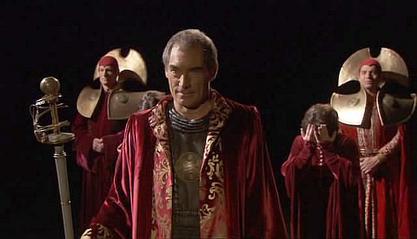
Every once in a while, I'll see a possibility in Doctor Who that isn't explored by the official writers. Some of those possibilities would require circumventing the particular canon of that series, though, so that isn't a big problem. Still, I'd like to take those ideas and work out a campaign involving time and other dimensional travel, exploring some of those matters that I see as possibilities. For instance, there is an incredibly good scene in one of the recent seasons in which [SPOILERS] several members of the Time Lord species attempt to escape the Time War and re-engage with the regular universe. The scene includes some very mythic (I can't think of another word to describe it) imagery, such as the two figures covering their eyes (said to be the ones who voted against escaping the Time War). Combining that with my own predilections, I thought about the idea of existing outside of time - that is, not participating in time at all, but existing instead in an eternal sense. That's a complex topic, touching on the ideas of explicate and implicate order, myth, and so on. The best way that I've seen to handle those ideas is in the concept of Hero Questing from RuneQuest and HeroQuest. In these, there is a mythic dimension which can be entered into, and where, effectively, the players interact with mythic scenes and figures. In these, then, a player may walk through the scenes of a story as though they were rooms, with each scene recurring in the same basic form each time it is encountered. There are good ways and bad ways to interact with those scenes, but the scene "resets", as it were, each time. This should allow exploration of the idea of implicate order in a gaming context. I'd need to develop exactly what would happen as a result of leaving time and returning into it, of course. Perhaps things could be manifested in time from outside of it, or alterations could be made to the shape of time from the metatemporal zone (something like a wish in fantasy games, perhaps) if the metatemporal sequence is engaged properly.
I am also quite fond of alternate timelines, so that would violate one of the critical canon rules of Doctor Who (which has made a significant plot point of the near-complete separation of alternate timelines). So, my idea would be that there are several dimensions, or spheres, in which players can interact with the game universe: different areas of space, different areas of time, different timelines (with their own areas of space and time), and metatemporal/mythic "space".
At least one of the characters would be a "Time Lord" equivalent (not sure what they'd be called), who has undergone an initiatory experience similar to the Gallifreyans' exposure to the Time Vortex or Zelazny's Amberites' walking of the Pattern. That character would have access to a trans/metatemporal vessel like the Doctor's TARDIS which would have the ability to travel anywhere in space, time, across transtemporal lines, or into metatemporal space. There should probably be limits to that, for dramatic purposes, but I am not sure at the moment what they should be exactly. Something that limits how often the players can change their position in space/time/transtime/metatime would probably be important, and perhaps also how "far" the vessel can change position in any given period. That latter, though, may not be necessary, and might even be undesirable.
The players should be given access to some extreme high-tech items that minimize their need to engage in normal commerce, as the point would be exploration, not normal economics. We don't want to have the players setting themselves up as transtemporal merchants, for instance. So, some sort of food dispenser would be required, and perhaps other post-scarcity items of technology (replicators? utility fog? some sort of immortality or other cure for death?) would have a useful place in the setting. The point, after all, would be universal tourism, not the normal sorts of adventure drivers. Certainly, giving the players' vessel more space inside than out would be a given, allowing the vessel to more easily serve as a base of operations while also letting it be unobtrusive when necessary.
Basically, I don't think that many gaming versions of time travel have really touched on the possibilities and intense strangeness involved in the subject. It would be fun to explore those.
One of the things I've been doing is catching up on Doctor Who, including watching some of the older series episodes. That's all well and good, but the ideas there have given me some things to think about in terms of a possible game. Right now, I'm thinking of it in terms of GURPS, but I'm sure that other systems could serve as well.
| This scene exists forever, always, embedded in every moment. |
I am also quite fond of alternate timelines, so that would violate one of the critical canon rules of Doctor Who (which has made a significant plot point of the near-complete separation of alternate timelines). So, my idea would be that there are several dimensions, or spheres, in which players can interact with the game universe: different areas of space, different areas of time, different timelines (with their own areas of space and time), and metatemporal/mythic "space".
At least one of the characters would be a "Time Lord" equivalent (not sure what they'd be called), who has undergone an initiatory experience similar to the Gallifreyans' exposure to the Time Vortex or Zelazny's Amberites' walking of the Pattern. That character would have access to a trans/metatemporal vessel like the Doctor's TARDIS which would have the ability to travel anywhere in space, time, across transtemporal lines, or into metatemporal space. There should probably be limits to that, for dramatic purposes, but I am not sure at the moment what they should be exactly. Something that limits how often the players can change their position in space/time/transtime/metatime would probably be important, and perhaps also how "far" the vessel can change position in any given period. That latter, though, may not be necessary, and might even be undesirable.
The players should be given access to some extreme high-tech items that minimize their need to engage in normal commerce, as the point would be exploration, not normal economics. We don't want to have the players setting themselves up as transtemporal merchants, for instance. So, some sort of food dispenser would be required, and perhaps other post-scarcity items of technology (replicators? utility fog? some sort of immortality or other cure for death?) would have a useful place in the setting. The point, after all, would be universal tourism, not the normal sorts of adventure drivers. Certainly, giving the players' vessel more space inside than out would be a given, allowing the vessel to more easily serve as a base of operations while also letting it be unobtrusive when necessary.
Basically, I don't think that many gaming versions of time travel have really touched on the possibilities and intense strangeness involved in the subject. It would be fun to explore those.
Labels:
GURPS,
HeroQuest,
ideas,
RuneQuest,
science fiction,
worldbuilding
Wednesday, July 25, 2012
Aslan Poetry
(Note: This is a translated form of an Aslan Yoyeaokhtef, which is an artform that combines poetry, calligraphy, and drama. The calligraphic elements are missing, of course, the translation is imperfect, and the poetic ornament does not carry over well. Still, it should get across the general meaning and some of the beauty of the artwork, which was created in the wake of a specific incident.)
The bright flower shivers
In the shadow of the grazing cow.*
I pounce and preserve its fragile beauty.
*"Cow" is the closest Anglic word available to represent the Aslan term for a grazing meat animal native to Kusyu. It is seen as quite stupid and so frequently is used to represent dishonorable persons.
The bright flower shivers
In the shadow of the grazing cow.*
I pounce and preserve its fragile beauty.
*"Cow" is the closest Anglic word available to represent the Aslan term for a grazing meat animal native to Kusyu. It is seen as quite stupid and so frequently is used to represent dishonorable persons.
Friday, July 20, 2012
Not Everyone Thinks The Same Way
This is going to meander for a bit, so bear with me as I slowly move toward the point.
A long time ago, I played my first game of Pendragon. I had heard about it, of course, but it was my first opportunity to actually play the game. Now, one thing I've never been secretive about, but which I don't bring up unless it's relevant, is that I'm a "pagan", or polytheist. When atheists bring up the argument that "we all don't believe in Zeus, why not just not believe in one more god?", I'm left laughing, because I "believe" in Zeus (as it were - "belief" is a complex subject for me; suffice it to say that I "believe" in Zeus in the same way that someone else might "believe" in the Prime Minister of Japan), among other gods. This is relevant because, when we were making characters, I found out that I could play a "pagan" knight in Pendragon. That was pretty cool to me, since at the time I was still just finding out that there were other polytheists in the modern, Western world, so of course I made a pagan knight as my character.
Here's the thing about people who are coming into an identity, and it was true of me at the time: they tend to be pretty intense. Since they are finding self-definition in terms of that identity, they tend to see everything in terms of that identity and relations to that identity. It's kinda like the old saw that when all you have is a hammer, all problems look like nails. Anyway, at the time, I was pretty strongly involved in my identity as a polytheist or pagan. Another thing about identity is that, when a person is strongly involved in it, people who don't belong to that identity are something of a threat. They either challenge that identity or create a boundary that reinforces that identity. It is pretty easy, actually, to force the challenging factors to conform to the reinforcement role by treating them as opposing forces. That is, someone who is not part of that identity can be either someone who presents an opportunity for deeper thinking about that identity and so deepen our connection to that identity (but this has two drawbacks: first, it is difficult work, and second, it can cause us to reject the identity), or they can be an opposing force that causes us to entrench more strongly in that identity. We can force people from the first category into the second by redefining them as "enemies". It is also possible to force people from the second category into the first, but that requires a subtlety of approach that is very rare (though it can be learned).
So, here I am, playing a pagan knight, with all of this identity matter still running hard in my head (I think I can't have identified as pagan for more than about 5-8 years at that point, and my serious involvement must have been less than 2). The scenario was set at a tournament, at which there were (of course) both Christian and pagan knights. Step by inexorable step, I found myself building a narrative where my pagan knight - and the other pagan knights were following my lead here - was in opposition to the Christian knights.
The thing is, in Pendragon, there isn't a strong theme of pagan vs. Christian. The GM of the game also didn't really want to deal with that theme. So, his first reaction to this development was to tell us that there wasn't a big pagan vs. Christian vibe at the tournament or in the world at large. He quickly backed off of that, to his credit, but that initial reaction, to try to control how the players reacted to the world, was an interesting one in retrospect.
At the time, gaming was starting to move in the direction of "story" that would ultimately result in the White Wolf concentration (in theory, at least) to the extent of redefining the Referee as a Storyteller, and then to the modern "story games" that bear only slight resemblance to the earliest adventure games. As a result, the idea that the GM was presenting a story within which the players would have some interactive power was becoming fashionable. This is a perfectly valid way to play this sort of game, of course, but the reaction of the GM of that Pendragon game is particularly interesting in that he stepped back from imposing his story. His impulse was to ask the players to head back to the story he wanted, but he chose instead, at least ultimately, to allow the players to lead the game where they wanted it to go, for good or ill.
For me, this was a critical moment in my gaming history. I started at that point to see that the "storytellers" in a roleplaying game were the players. The Referee was not the storyteller (though I would be derailed from this train of thought by White Wolf, and later by story games, for a while), who instead resembled something more like an editor.
What that long-ago Pendragon GM should have done, rather than tell us that "there's not really an opposition between pagans and Christians", which was basically telling us what our characters should be thinking, was to either let us run with what we wanted our characters to think (to be fair, that's what he did, in the end) or to, at most, present an NPC authority who would try to guide our characters. For instance, an older Druid priest who gave our knights guidance and tried to smooth over our conflicts of religion by, I don't know, teaching us about the Grail or the way that the Christians' idea of the Crucifixion resembles the native ideas of the King in the Ground (such as the head of Bendigeidvran, buried and protecting the island of Britain from invaders until it was disinterred). It's because not every person in a game world is going to be seeing things the same way. Like in our world, where on the one hand you have people like the Quakers, who are Christian, but also people like Fred Phelps, who is also Christian. Which one of them is correct? Sure, most people would pick the Quakers as better people, but the Phelps family are still Christians. There isn't a GM out there telling them that Christians don't think that way, but there are people (and perhaps spirits, if you accept that sort of thing) who are, and people who are telling them the opposite. It's still down to the Phelps family members, though, as to what they choose. If they did not have those choices, then they would not be responsible for them. Similarly, players should be responsible for the choices they make for their characters, and if the GM is making decisions for them, then why are they playing? (That gets a little more complex when morale and temptation systems come into play, or the personality trait system from Pendragon, but that's a topic for another time.) That's one of the reasons that I think the Alignment system as presented in AD&D is a problem and should be discarded.
Which is me coming back again to the idea of the sandbox, where the players are allowed to have their characters do what they want those characters to do. The environment can react to the characters, and there can even be NPCs with goals who actively affect the environment, but the environment shouldn't be altered for metagame reasons (that is, it should follow the classic idea that, if there are six trolls in a room on the third level of a dungeon, then if a single 1st level character shows up there will be six trolls, and if 20 10th level characters show up there will be six trolls, but if the trolls have been attacked and send for help from the hobgoblins there might be an additional 20 hobgoblins along with the surviving trolls the next time the players show up; I guess that one is a pretty big room).
A long time ago, I played my first game of Pendragon. I had heard about it, of course, but it was my first opportunity to actually play the game. Now, one thing I've never been secretive about, but which I don't bring up unless it's relevant, is that I'm a "pagan", or polytheist. When atheists bring up the argument that "we all don't believe in Zeus, why not just not believe in one more god?", I'm left laughing, because I "believe" in Zeus (as it were - "belief" is a complex subject for me; suffice it to say that I "believe" in Zeus in the same way that someone else might "believe" in the Prime Minister of Japan), among other gods. This is relevant because, when we were making characters, I found out that I could play a "pagan" knight in Pendragon. That was pretty cool to me, since at the time I was still just finding out that there were other polytheists in the modern, Western world, so of course I made a pagan knight as my character.
Here's the thing about people who are coming into an identity, and it was true of me at the time: they tend to be pretty intense. Since they are finding self-definition in terms of that identity, they tend to see everything in terms of that identity and relations to that identity. It's kinda like the old saw that when all you have is a hammer, all problems look like nails. Anyway, at the time, I was pretty strongly involved in my identity as a polytheist or pagan. Another thing about identity is that, when a person is strongly involved in it, people who don't belong to that identity are something of a threat. They either challenge that identity or create a boundary that reinforces that identity. It is pretty easy, actually, to force the challenging factors to conform to the reinforcement role by treating them as opposing forces. That is, someone who is not part of that identity can be either someone who presents an opportunity for deeper thinking about that identity and so deepen our connection to that identity (but this has two drawbacks: first, it is difficult work, and second, it can cause us to reject the identity), or they can be an opposing force that causes us to entrench more strongly in that identity. We can force people from the first category into the second by redefining them as "enemies". It is also possible to force people from the second category into the first, but that requires a subtlety of approach that is very rare (though it can be learned).
So, here I am, playing a pagan knight, with all of this identity matter still running hard in my head (I think I can't have identified as pagan for more than about 5-8 years at that point, and my serious involvement must have been less than 2). The scenario was set at a tournament, at which there were (of course) both Christian and pagan knights. Step by inexorable step, I found myself building a narrative where my pagan knight - and the other pagan knights were following my lead here - was in opposition to the Christian knights.
The thing is, in Pendragon, there isn't a strong theme of pagan vs. Christian. The GM of the game also didn't really want to deal with that theme. So, his first reaction to this development was to tell us that there wasn't a big pagan vs. Christian vibe at the tournament or in the world at large. He quickly backed off of that, to his credit, but that initial reaction, to try to control how the players reacted to the world, was an interesting one in retrospect.
At the time, gaming was starting to move in the direction of "story" that would ultimately result in the White Wolf concentration (in theory, at least) to the extent of redefining the Referee as a Storyteller, and then to the modern "story games" that bear only slight resemblance to the earliest adventure games. As a result, the idea that the GM was presenting a story within which the players would have some interactive power was becoming fashionable. This is a perfectly valid way to play this sort of game, of course, but the reaction of the GM of that Pendragon game is particularly interesting in that he stepped back from imposing his story. His impulse was to ask the players to head back to the story he wanted, but he chose instead, at least ultimately, to allow the players to lead the game where they wanted it to go, for good or ill.
For me, this was a critical moment in my gaming history. I started at that point to see that the "storytellers" in a roleplaying game were the players. The Referee was not the storyteller (though I would be derailed from this train of thought by White Wolf, and later by story games, for a while), who instead resembled something more like an editor.
What that long-ago Pendragon GM should have done, rather than tell us that "there's not really an opposition between pagans and Christians", which was basically telling us what our characters should be thinking, was to either let us run with what we wanted our characters to think (to be fair, that's what he did, in the end) or to, at most, present an NPC authority who would try to guide our characters. For instance, an older Druid priest who gave our knights guidance and tried to smooth over our conflicts of religion by, I don't know, teaching us about the Grail or the way that the Christians' idea of the Crucifixion resembles the native ideas of the King in the Ground (such as the head of Bendigeidvran, buried and protecting the island of Britain from invaders until it was disinterred). It's because not every person in a game world is going to be seeing things the same way. Like in our world, where on the one hand you have people like the Quakers, who are Christian, but also people like Fred Phelps, who is also Christian. Which one of them is correct? Sure, most people would pick the Quakers as better people, but the Phelps family are still Christians. There isn't a GM out there telling them that Christians don't think that way, but there are people (and perhaps spirits, if you accept that sort of thing) who are, and people who are telling them the opposite. It's still down to the Phelps family members, though, as to what they choose. If they did not have those choices, then they would not be responsible for them. Similarly, players should be responsible for the choices they make for their characters, and if the GM is making decisions for them, then why are they playing? (That gets a little more complex when morale and temptation systems come into play, or the personality trait system from Pendragon, but that's a topic for another time.) That's one of the reasons that I think the Alignment system as presented in AD&D is a problem and should be discarded.
Which is me coming back again to the idea of the sandbox, where the players are allowed to have their characters do what they want those characters to do. The environment can react to the characters, and there can even be NPCs with goals who actively affect the environment, but the environment shouldn't be altered for metagame reasons (that is, it should follow the classic idea that, if there are six trolls in a room on the third level of a dungeon, then if a single 1st level character shows up there will be six trolls, and if 20 10th level characters show up there will be six trolls, but if the trolls have been attacked and send for help from the hobgoblins there might be an additional 20 hobgoblins along with the surviving trolls the next time the players show up; I guess that one is a pretty big room).
Saturday, July 14, 2012
A Little Bit Of A Personal Gaming Update
I have a number of projects ongoing, and some news on my own gaming front. Since I can't seem to sit down and write content that I want to put up on this here blog thing, I guess that a personal update is in order.
In general, I am doing a lot less than I would like to be. In part, this is because I really can't stand the heat, and there's no way to get out of the kitchen. Of course, people in other parts of the country are sneering at me right now, as I am in one of the most temperate parts of the Lower 48, but I am acclimatized to here ("here" being the Pacific Northwest), and it is hot for here (and humid, which is very unusual). Other parts have to do with life issues.
First up, the project on which I want to be spending a lot more time than I am is the Top Secret retroclone. I am working on it, but like this blog, gaming takes second place to things that are happening in real life. I am considering how to get art for it, which leads me to thinking about Kickstarter, which further leads to the idea of doing a real print run rather than, or in addition to, a Lulu.com product. I'm not sure about the ins and outs of that, though. I'll talk to people and see what can be done.
Second, it looks like I'll be trying out this newfangled online gaming by teleconferencing thing. Happily, it looks to be a Traveller game, albeit the Mongoose version. I still have to make a character and whatnot, but that should go pretty quickly.
Next there's the AD&D game I've been working on. I've done a reasonable amount of work on it. I've got some of the main city of the campaign mapped, along with some sketches toward the ground floor of the tower-citadel of the city's masters. I have ideas about the megadungeon, but haven't gotten to putting lines on paper for the map yet. I don't know whether to wait until I have at least the sketches of the city's sewers done first (the dungeon is located underneath the city) or fit the sewers around the dungeon. However, those issues have dropped in priority because…
Thinking about Traveller has made me realize that I really, really love that game. I have a science fiction setting that I had been working on for some short stories, and decided that now would be a fine time to put it in gaming form. Some of the themes I want to explore with the setting include the value of multiple cultural expressions to the long-term viability of intelligent species, the nature of human institutions like honor, empire, and such, and the ability of varying worldviews to coexist or not. There are a dozen human interstellar polities, and a dozen aliens. Players will only be human, and at least at first, I intend to limit them to the central Terran Federation. Things are not always what they seem, of course, but sometimes they are. The setting has a lot of secrets sitting in my head. For now, I'll be using MegaTraveller, with some ideas taken from GURPS Traveller: Far Trader and First In. Eventually, I'll convert it to T5.
Other projects, like the WRG Game, are on hold right now.
What have you been doing in regard to gaming these days?
In general, I am doing a lot less than I would like to be. In part, this is because I really can't stand the heat, and there's no way to get out of the kitchen. Of course, people in other parts of the country are sneering at me right now, as I am in one of the most temperate parts of the Lower 48, but I am acclimatized to here ("here" being the Pacific Northwest), and it is hot for here (and humid, which is very unusual). Other parts have to do with life issues.
First up, the project on which I want to be spending a lot more time than I am is the Top Secret retroclone. I am working on it, but like this blog, gaming takes second place to things that are happening in real life. I am considering how to get art for it, which leads me to thinking about Kickstarter, which further leads to the idea of doing a real print run rather than, or in addition to, a Lulu.com product. I'm not sure about the ins and outs of that, though. I'll talk to people and see what can be done.
Second, it looks like I'll be trying out this newfangled online gaming by teleconferencing thing. Happily, it looks to be a Traveller game, albeit the Mongoose version. I still have to make a character and whatnot, but that should go pretty quickly.
Next there's the AD&D game I've been working on. I've done a reasonable amount of work on it. I've got some of the main city of the campaign mapped, along with some sketches toward the ground floor of the tower-citadel of the city's masters. I have ideas about the megadungeon, but haven't gotten to putting lines on paper for the map yet. I don't know whether to wait until I have at least the sketches of the city's sewers done first (the dungeon is located underneath the city) or fit the sewers around the dungeon. However, those issues have dropped in priority because…
Thinking about Traveller has made me realize that I really, really love that game. I have a science fiction setting that I had been working on for some short stories, and decided that now would be a fine time to put it in gaming form. Some of the themes I want to explore with the setting include the value of multiple cultural expressions to the long-term viability of intelligent species, the nature of human institutions like honor, empire, and such, and the ability of varying worldviews to coexist or not. There are a dozen human interstellar polities, and a dozen aliens. Players will only be human, and at least at first, I intend to limit them to the central Terran Federation. Things are not always what they seem, of course, but sometimes they are. The setting has a lot of secrets sitting in my head. For now, I'll be using MegaTraveller, with some ideas taken from GURPS Traveller: Far Trader and First In. Eventually, I'll convert it to T5.
Other projects, like the WRG Game, are on hold right now.
What have you been doing in regard to gaming these days?
Sunday, July 8, 2012
Not-So-Obscure Games: Traveller: The New Era
![]() |
| What is going on here? |
Traveller: The New Era (or "TNE" for short) was a melding of concepts from the previous Traveller games with the House System. Characteristics were similar to Traveller, but not quite the same. Instead of Strength, Dexterity, Endurance, Intelligence, Education, and Social Standing (and Psionic Strength), a TNE character was rated in Strength, Agility, Constitution, Intelligence, Education, and Charisma (plus Psionics and Social Standing). Unlike Traveller, which rated initial characteristics on 2D6, TNE rated characteristics on 2D6-1. This is an easy conversion, of course, but it does require conversion. Other editions of Traveller can be used directly with each other, no conversion required.
In other editions of Traveller, character skills are rated in small numbers. A skill rating of 1 is acceptable, 3 is significant, and 5 is amazing, with different editions implementing those numbers in different ways. TNE, on the other hand, uses "asset" ratings, which are the sum of an ability and some skill points. These are around 10 for an average professional skill (roughly equivalent to about 3 in other Traveller games). The asset is multiplied by the difficulty modifier (1 for "Difficult" tasks, 2 for "Average" ones, ½ for "Formidable" difficulty, 4 for "Easy" tasks, and ¼ for "Impossible" tasks) to find the roll needed on a D20 for success. There are some finer points, like degree of success based on the difference between the target number and the actual roll, but that's basically how action resolution works. There are occasional instances where the skill points matter, so they are also tracked.
Characters gain starting skills by engaging in "careers". This is also like other Traveller editions, though there are many differences in the actual implementation of that basic idea. In other Traveller editions, most of the previous experience in careers is adjudicated by random dice rolls, but most of the previous experience in TNE is by player choice (though there are some random dice rolls, too). Each period of four years in a career gives a number of skill points to divide between the skills available in that career. Those skill points, when totaled at the end of generation, are added to the appropriate characteristic to determine the character's asset in that skill. In addition, careers that involved combat would give a bonus to a character's "Coolness" rating, used in combat.
In most of the other editions, combat is based around abstract "range bands" and 1.5m squares, depending on the exact situation (the squares are usually used for interior and starship combat, the range bands for outdoors combat), with 15m squares replacing the range bands in MegaTraveller. In TNE, the ground scale is based on 2m squares. It's a small change, but it makes previous materials (such as starship deck plans) useless, and so was annoying. It was also annoying for those of us who tried to use the material to make our own starship deck plans, as the 1.5m squares were perfect for that (2 of those squares, assuming 3m per deck, were 13.5 m3, which was the approximate value of one "displacement ton"), while the 2m squares did not break down into those traditional Traveller measurements so easily. In fact, I don't think that any deck plans were ever released for TNE (or, if there were, they were from secondary publishers, not GDW).
A turn in TNE was 5 seconds, which is comparable to most of the others (usually 6 seconds, though Classic Traveller had a combat turn of 15 seconds). Coolness rating was important, as it was a character's initiative rating, with higher Coolness taking actions first. Very high initiative characters (over 5) would also get an extra action in the round.
TNE had hit locations, which was available as an optional rule in MegaTraveller, but which has never had much importance in the game other than in this edition. A character would take damage in each location separately, with the amount of damage to a location determining the effect. Unfortunately, the "hit capacity" of each location was very high (the chest alone had triple STR+CON points, or an average of 36, the head twice CON, and the other body parts twice STR+CON - compare to an overall total of about 21 for damage dice that were about the same in the other Traveller editions, with about 14 points of damage to render a character out of commission, at least on the first hit). There was a special rule in TNE for auto-kill results to close the lethality gap.
Where TNE shined was in Fire, Fusion, and Steel, the "technical architecture" book. That was a set of systems for designing everything from starships to ground cars, from meson accelerator spinal mounts to body pistols. It was the first major release that included all of those in one place, deriving ideas from both the Striker and MegaTraveller vehicle design systems and from BTRC's Guns, Guns, Guns (aka 3G) weapon design system. This would kick off the fashion for extensive design systems that would culminate with GURPS Vehicles and the CORPS VDS ("Vehicle Design System"). Some people found these design tools intrusive on their experience (even if they didn't actually use them), and these sorts of systems have been falling out of fashion, sadly.
Quick digression about gaming philosophy: Some people have been complaining about detailed gaming systems. The usual argument is that they are too much work for games, since it is just as easy to simply eyeball some numbers, and the effect on the game is the same either way. Most of the information that shows up in those design sequences has no impact on games, they argue. There is much to be said for that latter approach. It was, for instance, the approach used in the original Traveller rules (excepting starships, of course). However, not everyone wants to approach a game in that way. Let me draw a comparison to Poul Anderson. Back in the '60s and '70s, most SF authors would eyeball their fictional worlds. Poul Anderson, though, would work out all of the details of his worlds: their orbital periods, surface albedo, axial tilt, primary's luminosity, and so on. Most of that information had no effect on his stories. However, that deep background informed his authorial choices. In the same way, a lot of these design choices in games don't have any direct effect, but they give deeper background information. Plus, in an open sandbox style, you never know what will be important. It's not to say that detailed design is the best way to do things, but it is one way to approach a game, and "good enough" estimation is not necessarily the best way to go either.
The starship combat system of TNE was excellent, as well. The designers learned what they could from people who had worked on the SDI project of the 1980s, among others, and presented a fairly realistic system. The first release of it was in the board game Brilliant Lances. Starship hit locations were filled with the systems from the design sequences and selected by die roll from among a subset that depended on the facing of the target in comparison to the firing ship. The boardgame used hexes (of 30,000km each) and vector movement, while TNE abstracted this to range bands and other abstractions.
Anyway, it was a solid game, it's just that I prefer Traveller to Twilight 2000. I'm also very much, as I mentioned in the previous discussion, not fond of the background changes made. One of these days, I'll talk about how a Traveller game works. That is, the general outline of play.
Sunday, June 24, 2012
[V&V]FBI Guide to Metahumans: Project GILGAMESH
In addition to Princess and the teacher, Tyger, there are four other children (all of the other four are teenagers, actually) who are part of Project GILGAMESH.
Umbra
Identity: David Smith
Side: US Government/Project GILGAMESH
Sex: M
Experience: 0
Level: 1
Age: 17
Training: Education (Military)
Powers:
1. Teleport: instantly travel a number of inches equal to 100 times his current Power. PR = 3.
2. Non-Corporealness: PR = 4 per hour.
3. Animate Shadows: similar to Solid Energy Illusions, can animate up to current Power x 2 Creation Points. Damage is by a chilling touch. Range = 26".
4. Invisibility: PR = 1 per hour.
5. Special Requirement: Can only use powers when shadows are present (that is, not in bright light or total darkness). Teleport must begin and end in shadowy areas.
Weight: 160 lbs.
Basic Hits: 4
Agility Mod: -
Strength: 10
Endurance: 15
Agility: 13
Intelligence: 17
Charisma: 8
Reactions from:
Allies: -2
Enemies: +2
Hit Mod: 2.808
Hit Points: 12
Damage Mod: +2
Heal Rate: 1.6
Accuracy: +1
Power: 55
Carrying Cap: 200 lbs.
Basic HTH: 1d4
Movement Rates: 38" ground
Det. Hidden: 12%
Det. Danger: 16%
Inventing Points: 1.7
Inventing: 51%
Origin & Background: David never wanted to be noticed. Getting noticed only meant that his father was paying attention to him, and that never ended well. When his father came home drunk and started beating his mother, David's powers manifested as he faded into the shadows, then the shadows came to life around him and stopped his father. He wasn't in time to save his mother, who died of cerebral edema several days later. David was put into foster care, then found his way into Project GILGAMESH.
Nike
Identity: Linda Chen
Side: US Government/Project GILGAMESH
Sex: F
Experience: 0
Level: 1
Age: 15
Training: Education (Military)
Powers:
1. Wings: fly at 1764" (401 mph), PR = 1 per hour. (+3 Agility)
2. Heightened Strength +11, Heightened Agility +13
Weight: 120 lbs.
Basic Hits: 3
Agility Mod: +2
Strength: 22
Endurance: 13
Agility: 28
Intelligence: 14
Charisma: 14
Reactions from:
Allies: +1
Enemies: -1
Hit Mod: 7.7616
Hit Points: 24
Damage Mod: +3
Heal Rate: 0.9
Accuracy: +5
Power: 77
Carrying Cap: 717 lbs.
Basic HTH: 1d8
Movement Rates: 63" ground, 1764" flying
Det. Hidden: 10%
Det. Danger: 14%
Inventing Points: 1.4
Inventing: 42%
Origin & Background: No one really knows where Linda came from. She was found on the streets, seeming about 14 years old, complete with wings, but without any memories of where she came from. She was named by one of the technicians at Project GILGAMESH, and knows no other life. She has a very strong crush on David/Umbra, and will follow him anywhere. She carries a sword (+2 to hit, +1d6 damage) made of adamantium-like glass (structure 15), which she was carrying when found.
Diamond
Identity: Michael Glass
Side: US Government/Project GILGAMESH
Sex: M
Experience: 0
Level: 1
Age: 16
Training: Education (Military)
Powers:
1. Invisibility: PR = 1 per hour.
2. Force Field: range = 30". Can create a wall up to his current Power inches on a side, and other abilities as listed in the rules.
Weight: 210 lbs.
Basic Hits: 5
Agility Mod: -
Strength: 7
Endurance: 15
Agility: 13
Intelligence: 8
Charisma: 10
Reactions from:
Allies: -
Enemies: -
Hit Mod: 1.6848
Hit Points: 9
Damage Mod: -
Heal Rate: 2
Accuracy: +1
Power: 43
Carrying Cap: 194 lbs.
Basic HTH: 1d4
Movement Rates: 35" ground
Det. Hidden: 6%
Det. Danger: 11%
Inventing Points: 0.8
Inventing: 24%
Origin & Background: Very shy, Michael prefers not to be touched or seen. When his mutant powers manifested, they reflected his very withdrawn personality. His parents were at a loss for how to deal with him, so when some men from the government said that they could help him, they were relieved and let him go without a fuss. Michael doesn't blame them, as he knows that their life has been hard.
The Cat
Identity: Katherine Glockman
Side: US Government/Project GILGAMESH
Sex: F
Experience: 0
Level: 1
Age: 14
Training: Education (Military)
Powers:
1. Cat Powers (Heightened Agility +20; Speed Bonus +90" ground; Natural Weaponry +2 to hit, +4 damage in unarmed combat; Heightened Senses: Night Vision).
2. Regeneration: take an action to heal full healing rate up to once per turn. Can't regenerate damage from silver weapons.
3. Heightened Defense: all attacks against The Cat are at -4 to hit.
Weight: 140 lbs.
Basic Hits: 3
Agility Mod: -
Strength: 10
Endurance: 13
Agility: 33
Intelligence: 11
Charisma: 12
Reactions from:
Allies: +1
Enemies: -1
Hit Mod: 4.76
Hit Points: 15
Damage Mod: +4
Heal Rate: 0.9
Accuracy: +6
Power: 67
Carrying Cap: 161 lbs.
Basic HTH: 1d4
Movement Rates: 146" ground
Det. Hidden: 8%
Det. Danger: 12%
Inventing Points: 1.1
Inventing: 33%
Origin & Background: A fan of anime from a young age, and especially fond of cats and catgirls, Kat was delighted to discover that she had the grace and agility of a cat, and then found that she could extend claws from under her fingernails and her eyes had changed to look like a cat's! Obsessed with catgirls, she dresses in that style all the time. The officials of Project GILGAMESH have been very permissive of the unusual preferences of the kids on the theory that repressing them might cause the mutant powers to become less useful.
Umbra
Identity: David Smith
Side: US Government/Project GILGAMESH
Sex: M
Experience: 0
Level: 1
Age: 17
Training: Education (Military)
Powers:
1. Teleport: instantly travel a number of inches equal to 100 times his current Power. PR = 3.
2. Non-Corporealness: PR = 4 per hour.
3. Animate Shadows: similar to Solid Energy Illusions, can animate up to current Power x 2 Creation Points. Damage is by a chilling touch. Range = 26".
4. Invisibility: PR = 1 per hour.
5. Special Requirement: Can only use powers when shadows are present (that is, not in bright light or total darkness). Teleport must begin and end in shadowy areas.
Weight: 160 lbs.
Basic Hits: 4
Agility Mod: -
Strength: 10
Endurance: 15
Agility: 13
Intelligence: 17
Charisma: 8
Reactions from:
Allies: -2
Enemies: +2
Hit Mod: 2.808
Hit Points: 12
Damage Mod: +2
Heal Rate: 1.6
Accuracy: +1
Power: 55
Carrying Cap: 200 lbs.
Basic HTH: 1d4
Movement Rates: 38" ground
Det. Hidden: 12%
Det. Danger: 16%
Inventing Points: 1.7
Inventing: 51%
Origin & Background: David never wanted to be noticed. Getting noticed only meant that his father was paying attention to him, and that never ended well. When his father came home drunk and started beating his mother, David's powers manifested as he faded into the shadows, then the shadows came to life around him and stopped his father. He wasn't in time to save his mother, who died of cerebral edema several days later. David was put into foster care, then found his way into Project GILGAMESH.
Nike
Identity: Linda Chen
Side: US Government/Project GILGAMESH
Sex: F
Experience: 0
Level: 1
Age: 15
Training: Education (Military)
Powers:
1. Wings: fly at 1764" (401 mph), PR = 1 per hour. (+3 Agility)
2. Heightened Strength +11, Heightened Agility +13
Weight: 120 lbs.
Basic Hits: 3
Agility Mod: +2
Strength: 22
Endurance: 13
Agility: 28
Intelligence: 14
Charisma: 14
Reactions from:
Allies: +1
Enemies: -1
Hit Mod: 7.7616
Hit Points: 24
Damage Mod: +3
Heal Rate: 0.9
Accuracy: +5
Power: 77
Carrying Cap: 717 lbs.
Basic HTH: 1d8
Movement Rates: 63" ground, 1764" flying
Det. Hidden: 10%
Det. Danger: 14%
Inventing Points: 1.4
Inventing: 42%
Origin & Background: No one really knows where Linda came from. She was found on the streets, seeming about 14 years old, complete with wings, but without any memories of where she came from. She was named by one of the technicians at Project GILGAMESH, and knows no other life. She has a very strong crush on David/Umbra, and will follow him anywhere. She carries a sword (+2 to hit, +1d6 damage) made of adamantium-like glass (structure 15), which she was carrying when found.
Diamond
Identity: Michael Glass
Side: US Government/Project GILGAMESH
Sex: M
Experience: 0
Level: 1
Age: 16
Training: Education (Military)
Powers:
1. Invisibility: PR = 1 per hour.
2. Force Field: range = 30". Can create a wall up to his current Power inches on a side, and other abilities as listed in the rules.
Weight: 210 lbs.
Basic Hits: 5
Agility Mod: -
Strength: 7
Endurance: 15
Agility: 13
Intelligence: 8
Charisma: 10
Reactions from:
Allies: -
Enemies: -
Hit Mod: 1.6848
Hit Points: 9
Damage Mod: -
Heal Rate: 2
Accuracy: +1
Power: 43
Carrying Cap: 194 lbs.
Basic HTH: 1d4
Movement Rates: 35" ground
Det. Hidden: 6%
Det. Danger: 11%
Inventing Points: 0.8
Inventing: 24%
Origin & Background: Very shy, Michael prefers not to be touched or seen. When his mutant powers manifested, they reflected his very withdrawn personality. His parents were at a loss for how to deal with him, so when some men from the government said that they could help him, they were relieved and let him go without a fuss. Michael doesn't blame them, as he knows that their life has been hard.
The Cat
Identity: Katherine Glockman
Side: US Government/Project GILGAMESH
Sex: F
Experience: 0
Level: 1
Age: 14
Training: Education (Military)
Powers:
1. Cat Powers (Heightened Agility +20; Speed Bonus +90" ground; Natural Weaponry +2 to hit, +4 damage in unarmed combat; Heightened Senses: Night Vision).
2. Regeneration: take an action to heal full healing rate up to once per turn. Can't regenerate damage from silver weapons.
3. Heightened Defense: all attacks against The Cat are at -4 to hit.
Weight: 140 lbs.
Basic Hits: 3
Agility Mod: -
Strength: 10
Endurance: 13
Agility: 33
Intelligence: 11
Charisma: 12
Reactions from:
Allies: +1
Enemies: -1
Hit Mod: 4.76
Hit Points: 15
Damage Mod: +4
Heal Rate: 0.9
Accuracy: +6
Power: 67
Carrying Cap: 161 lbs.
Basic HTH: 1d4
Movement Rates: 146" ground
Det. Hidden: 8%
Det. Danger: 12%
Inventing Points: 1.1
Inventing: 33%
Origin & Background: A fan of anime from a young age, and especially fond of cats and catgirls, Kat was delighted to discover that she had the grace and agility of a cat, and then found that she could extend claws from under her fingernails and her eyes had changed to look like a cat's! Obsessed with catgirls, she dresses in that style all the time. The officials of Project GILGAMESH have been very permissive of the unusual preferences of the kids on the theory that repressing them might cause the mutant powers to become less useful.
Saturday, June 23, 2012
Not-So-Obscure Games: Traveller Through The Years
As most people know, there are four editions of Traveller that have seen print from companies with which Marc Miller is or has been directly involved, one edition from Mongoose, and a few editions converted to other game systems (or "engines", as some would have it). The two most well-known of the latter are GURPS Traveller and T20 (the D20 system Traveller conversion), but others such as a HERO System conversion and even a D6 System conversion exist. These seem like quite different animals to me, as the conversions, by necessity, focus on the default background, while the Marc Miller games (and the Mongoose edition; in fact, the Mongoose edition offers several alternate settings) can be used with that background or with any other the Referee wants to design. In addition to those editions, Marc Miller is about to print a "definitive" edition, Traveller5.
Here's a quick overview of the editions, including some notes as to how they differ from each other.
First was classic Traveller. Often called "CT" or the "LBB Edition" (for "Little Black Books", which was the context that I first heard that acronym used, only later seeing it used for the Little Brown Books of original D&D). This was actually several sub-editions. In the very first edition, the space combat rules used a scale of an inch on the table being 1000 miles scale, and a turn being 15 minutes. One G of acceleration for one turn gave a vector of 2" on the table. This was changed quickly to a scale of one cm on the table being 1000km scale, and a turn of 1000 seconds, or 16 ⅔ minutes. In this version, one G of acceleration for one turn gave a vector of 10cm on the table. Other than that change, the game was largely the same through all printings of the LBBs and the squarebound paperback edition called The Traveller Book. This was the edition in which a character could famously die during character creation (which made more sense than it sounds, but I'm not writing an apologetic here). Combat was arbitrary, with armor and weapons cross-indexed on a table to determine a modifier to the attack roll, and damage being rated in an absolute number of dice if a hit was scored. Damage points were applied directly to the physical characteristics of a character. The only dice used in the game were six-sided, frequently used as a 2d6 roll. As time went on, a lot of additions were written, such as the "enhanced" character creation for Army, Navy, Marines, Merchant, and Scout characters, vehicle design (the first in gaming that modeled the mechanical parts of a vehicle and derived a set of ratings for the game from those, in the Traveller miniatures rules called Striker), alternate combat systems (in Snapshot and Azhanti High Lightning, mainly, but Striker had an influence as well), robot design, enhanced star system generation, and so on.
As those various details accumulated, the game started to become somewhat unwieldy. A new edition was called for (this was 10 years after the game was released, so it wasn't like they rushed into this), and the result was the second full edition, the atrociously-titled MegaTraveller, which is usually abbreviated "MT". Character creation was revised a bit, to give players a little more control over their characters and to reduce (but not eliminate, thank goodness) the "death in character creation problem" that some perceived in the original game. Many aspects of Striker combat were incorporated into the game, such as the vehicle design system (expanded to starships, though the derived ratings were different for starship combat, since it was treated much more abstractly even in terms of damage effects) and the combination of weapon penetration and armor ratings. Because the systems were not perfectly integrated, damage became a little complicated, and characters tracked two entirely different sets of hit points! One of these was the traditional Traveller system of applying damage to the characteristics of the character, while the other was derived from Striker damage ratings, and was a pair of hits ratings (the first for unconsciousness, the second for death) based on the "Life Level" of the character, which is the sum of the first three characteristics. Again, this works better in practice than it sounds, but it is still an obvious kludge. Personally, of the published editions so far, this is my favorite, though I strongly dislike the "Rebellion" background and the events that follow on from that. As time went on, a number of additions were made to the game, many of them from the company called Digest Group Publications (DGP) that belonged to the people who did most of the work in revising the game, and it continued to grow, but never became the unwieldy mess that classic Traveller became from its additions.
[ADDENDUM: 26 June 2012] In the spirit of the game, let me take a moment to issue a correction, and point out that one of the biggest problems with MegaTraveller was the immense amount of errata and corrections that were issued over the six years of its active publication. Most of those have been consolidated, and you can find them, for instance, here. There is also errata for the other editions there, but none of them approach the extensive errata issued officially for MegaTraveller. Well, the errata for T4 comes pretty close, I suppose.
However, GDW was making some… let's call them "interesting" decisions in the early 1990s. One of them was to create a "house system" to which all of their various games would be converted over time. This was based on the second edition of their popular (at the time) Twilight: 2000 game, and was an outgrowth of the system that they had developed for the excellent Space 1889 game (I'll talk about that one another time). Since the Rebellion background was growing interminable, they also decided to, in effect, reset the background. In my opinion, this was the biggest mistake that GDW made in its entire history. Through a dramatic plot device, nearly the entirety of known space in the Traveller default setting was subjected to an apocalyptic computer virus that nearly wiped out the spacefaring races. One area was spared this fate (through the foresight of its enlightened ruler), allowing more traditional Traveller games to continue if desired, but the idea was now that players would be trying to rebuild interstellar civilization. The new edition was called Traveller: The New Era, often abbreviated "TNE". I'm not really going to discuss this edition, as it was a dramatic change from the traditional Traveller system. It did include a book called Fire, Fusion, and Steel, which was a complete design system for everything from robots and guns to cars, tanks, ships, and even spacecraft. This was the forerunner of such gearhead books as GURPS Vehicles and CORPS VDS. Some of the "alternate tech" in the book made it clear that GDW intended to convert its other SF RPG, 2300AD (formerly known as Traveller: 2300, but changed when it became apparent that too many people were confused by the similarity of the title to Traveller, and another game that I intend to discuss on this blog in the future), into the system, but this never occurred. I do like TNE, but not enough to make it a regular option at my table. It did include some excellent supplementary material, such as the space combat boardgames Brilliant Lances and Battle Rider, a superior edition of the miniatures game (Striker II), a colony mini-game designed to be integrated with a roleplaying campaign (The World Tamer's Handbook), and so on. It was also a little frustrating, since it came out only 6 years after MT was released, and lasted less than 3.
Sadly, GDW closed its doors, relegating TNE to the dustbin of history (though you can get PDFs of it, from RPGNow or DriveThruRPG). Three years after releasing TNE, a new company formed by Marc Miller, FarFuture Enterprises, would release a new edition of Traveller which went back to its roots. Taking a cue from MT, it made character creation more player-friendly (enhancing choice, reducing pre-play lethality). Combat was greatly simplified such that now armor simply reduced the dice of damage rolled when a hit was scored, and damage was returned to its CT elegance. However, this edition, called Marc Miller's Traveller or Traveller4 (abbreviated almost always as "T4") was plagued by typos and insufficient development. A number of supplements were released (notably, the superior Pocket Empires, which introduced a mini-game of interstellar economics and politics), but the problems in the main rules and in the new Fire, Fusion, and Steel attached to it helped prevent the game from gaining any traction.
That brings us to today, 16 years after T4 was inflicted on an unsuspecting world, and 35 years after the game was first released. Later this year, Marc Miller's Far Future Enterprises will be releasing, at long last, Traveller5. With luck, this will be a definitive edition of the game, incorporating the best of all of the editions. I doubt that sunny prospect will occur, but I can dream.
If it doesn't, I notice that Mongoose's edition of the game includes the OGL, allowing third parties to use large portions of their text verbatim. You can find a link to their developers' kit toward the bottom of the sidebar on the left side of this blog. [EDIT 2025-11-28: They no longer carry it, but it can be found at this link.] I would be interested in using that to put together my own version, taking what I consider to be the best of each edition (and stealing liberally from other games as I desire). You can bet that it would look a lot like MT, just integrated more thoroughly. But I have a lot of other projects to get to first, so I am hoping that T5 is all it can be.
The other major option is GURPS Traveller, which makes use of an alternative timeline in which the Rebellion of the main background did not occur. I like this, since one of the reasons that I am no longer as fond as I once was of the Imperium background is that we know how it is going to turn out. Everything is for naught. Anything you build will only fall into the pit of Virus and have to be rebuilt. The setting is not endowed with the infinite possibilities of the future, since we know what the future must be. I hate metaplots, is what I'm saying. GURPS Traveller's alternate timeline erases the metaplot from the setting and allows players to chart an uncertain course into a dynamic future again. Unfortunately for me, Steve Jackson Games has chosen to present the rules updated for GURPS 4E such that they focus on the very early part of the setting where Terra is taking its first tentative steps among the stars, and meeting with the old and decadent Imperium (later to be called the First Imperium, as the Imperium of the main part of the setting is called the Third Imperium). This is unfortunate because it means that they have not converted a lot of the technology over to 4E standards. Ah, well. It's not like I haven't been moving away from GURPS recently. Designed, point-bought characters just don't meet my needs at this time.
Here's a quick overview of the editions, including some notes as to how they differ from each other.
As those various details accumulated, the game started to become somewhat unwieldy. A new edition was called for (this was 10 years after the game was released, so it wasn't like they rushed into this), and the result was the second full edition, the atrociously-titled MegaTraveller, which is usually abbreviated "MT". Character creation was revised a bit, to give players a little more control over their characters and to reduce (but not eliminate, thank goodness) the "death in character creation problem" that some perceived in the original game. Many aspects of Striker combat were incorporated into the game, such as the vehicle design system (expanded to starships, though the derived ratings were different for starship combat, since it was treated much more abstractly even in terms of damage effects) and the combination of weapon penetration and armor ratings. Because the systems were not perfectly integrated, damage became a little complicated, and characters tracked two entirely different sets of hit points! One of these was the traditional Traveller system of applying damage to the characteristics of the character, while the other was derived from Striker damage ratings, and was a pair of hits ratings (the first for unconsciousness, the second for death) based on the "Life Level" of the character, which is the sum of the first three characteristics. Again, this works better in practice than it sounds, but it is still an obvious kludge. Personally, of the published editions so far, this is my favorite, though I strongly dislike the "Rebellion" background and the events that follow on from that. As time went on, a number of additions were made to the game, many of them from the company called Digest Group Publications (DGP) that belonged to the people who did most of the work in revising the game, and it continued to grow, but never became the unwieldy mess that classic Traveller became from its additions.
[ADDENDUM: 26 June 2012] In the spirit of the game, let me take a moment to issue a correction, and point out that one of the biggest problems with MegaTraveller was the immense amount of errata and corrections that were issued over the six years of its active publication. Most of those have been consolidated, and you can find them, for instance, here. There is also errata for the other editions there, but none of them approach the extensive errata issued officially for MegaTraveller. Well, the errata for T4 comes pretty close, I suppose.
If it doesn't, I notice that Mongoose's edition of the game includes the OGL, allowing third parties to use large portions of their text verbatim. You can find a link to their developers' kit toward the bottom of the sidebar on the left side of this blog. [EDIT 2025-11-28: They no longer carry it, but it can be found at this link.] I would be interested in using that to put together my own version, taking what I consider to be the best of each edition (and stealing liberally from other games as I desire). You can bet that it would look a lot like MT, just integrated more thoroughly. But I have a lot of other projects to get to first, so I am hoping that T5 is all it can be.
The other major option is GURPS Traveller, which makes use of an alternative timeline in which the Rebellion of the main background did not occur. I like this, since one of the reasons that I am no longer as fond as I once was of the Imperium background is that we know how it is going to turn out. Everything is for naught. Anything you build will only fall into the pit of Virus and have to be rebuilt. The setting is not endowed with the infinite possibilities of the future, since we know what the future must be. I hate metaplots, is what I'm saying. GURPS Traveller's alternate timeline erases the metaplot from the setting and allows players to chart an uncertain course into a dynamic future again. Unfortunately for me, Steve Jackson Games has chosen to present the rules updated for GURPS 4E such that they focus on the very early part of the setting where Terra is taking its first tentative steps among the stars, and meeting with the old and decadent Imperium (later to be called the First Imperium, as the Imperium of the main part of the setting is called the Third Imperium). This is unfortunate because it means that they have not converted a lot of the technology over to 4E standards. Ah, well. It's not like I haven't been moving away from GURPS recently. Designed, point-bought characters just don't meet my needs at this time.
Monday, June 18, 2012
Inspiration
Some links of inspiring content from around, because I can't think of any useful content that isn't more V&V characters right now:
If you can't come up with story or scene ideas from these pictures, you aren't trying. Best of all, these things are all images from real life.
If your heroes aren't as brave as these children, then they're doing it wrong.
This company makes real-life secret doors. You may find their ideas of value.
Tap-dancing Satan. Your argument is irrelevant. Also, let me reiterate, tap-dancing Satan. On Lawrence Welk.
There are people who are looking forward to "uploading" their minds to computers. This should prove a useful corrective to their wide-eyed optimism.
If you can't come up with story or scene ideas from these pictures, you aren't trying. Best of all, these things are all images from real life.
If your heroes aren't as brave as these children, then they're doing it wrong.
![]() |
| A psychopomp god at the symbolic crossroads of a city. You can't make this up. What are the Secret Masters of the World up to here? |
This company makes real-life secret doors. You may find their ideas of value.
Tap-dancing Satan. Your argument is irrelevant. Also, let me reiterate, tap-dancing Satan. On Lawrence Welk.
There are people who are looking forward to "uploading" their minds to computers. This should prove a useful corrective to their wide-eyed optimism.
Wednesday, June 13, 2012
[V&V]FBI Guide to Metahumans: Tyger
(This is the first of these in which I include a "Mutant Power", that is to say a power that is not included in the basic V&V rules.)
Identity: Justin Archer
Side: US Government/Project GILGAMESH
Sex: M
Experience: 28433
Level: 7
Age: 29
Training: Intelligence
Powers:
1. Time Powers: a) Time Stop - PR = 8, take an action to activate, then take a full turn in which no other characters can act, though already active defenses will be in effect; b) Time Jump - vanish, then reappear in the same place a number of rounds later, PR = 1 per round jumped. He can only have one Time Power active at a time.
2. Teleportation: instantly travel a number of inches equal to his current Power score, PR = 1 per use.
3. Dimensional Travel: time travel, PR = 10 per journey.
Weight: 190 lbs.
Basic Hits: 4
Agility Mod: -
Strength: 12
Endurance: 13
Agility: 13
Intelligence: 14
Charisma: 15
Reactions from:
Allies: +2
Enemies: -2
Hit Mod: 2.4024
Hit Points: 10
Damage Mod: +1
Heal Rate: 1.2
Accuracy: +1
Power: 52
Carrying Cap: 288 lbs.
Basic HTH: 1d6
Movement Rates: 38" ground
Det. Hidden: 10%
Det. Danger: 14%
Inventing Points: 8.0 (1 was spent, I was increased)
Inventing: 42%
Origin & Background: When his mutant powers manifested, the orphan Justin used them to embark on a career of theft, stealing objects out from under the noses of their guardians. Finally captured by a Special Forces team equipped with advanced technology, he agreed to work with Project GILGAMESH as a trainer in exchange for immunity from prosecution for his prior crimes. When he has to fight, he likes to use a pair of Bowie knives (+1 to hit, +1d2 damage) to cut down his opponents between ticks of the clock. Never having had a family of his own, he is having some difficulty coming to terms with his new relationship with the kids of GILGAMESH.
Identity: Justin Archer
Side: US Government/Project GILGAMESH
Sex: M
Experience: 28433
Level: 7
Age: 29
Training: Intelligence
Powers:
1. Time Powers: a) Time Stop - PR = 8, take an action to activate, then take a full turn in which no other characters can act, though already active defenses will be in effect; b) Time Jump - vanish, then reappear in the same place a number of rounds later, PR = 1 per round jumped. He can only have one Time Power active at a time.
2. Teleportation: instantly travel a number of inches equal to his current Power score, PR = 1 per use.
3. Dimensional Travel: time travel, PR = 10 per journey.
Weight: 190 lbs.
Basic Hits: 4
Agility Mod: -
Strength: 12
Endurance: 13
Agility: 13
Intelligence: 14
Charisma: 15
Reactions from:
Allies: +2
Enemies: -2
Hit Mod: 2.4024
Hit Points: 10
Damage Mod: +1
Heal Rate: 1.2
Accuracy: +1
Power: 52
Carrying Cap: 288 lbs.
Basic HTH: 1d6
Movement Rates: 38" ground
Det. Hidden: 10%
Det. Danger: 14%
Inventing Points: 8.0 (1 was spent, I was increased)
Inventing: 42%
Origin & Background: When his mutant powers manifested, the orphan Justin used them to embark on a career of theft, stealing objects out from under the noses of their guardians. Finally captured by a Special Forces team equipped with advanced technology, he agreed to work with Project GILGAMESH as a trainer in exchange for immunity from prosecution for his prior crimes. When he has to fight, he likes to use a pair of Bowie knives (+1 to hit, +1d2 damage) to cut down his opponents between ticks of the clock. Never having had a family of his own, he is having some difficulty coming to terms with his new relationship with the kids of GILGAMESH.
Sunday, June 10, 2012
O Fortuna
One of the things that occasionally shows up in rule sets is the idea of "luck" as being something that a character can have that is not connected to the normal luck of dice rolling. For instance, in Fantasy Wargaming, almost every interaction with the rules is affected by a luck roll that can itself be modified by the native luck of the character (as a special ability gained during character creation). In GURPS, there are several types of luck advantages, each of which allows varying benefits, such as re-rolling dice (the most common) or narrative benefits (like "Serendipity", which forces the GM to include one "fortuitous but plausible coincidence" per game session). CORPS Luck causes all rounding done in any calculation (except character creation and calculations that do not directly affect the character) to be in the player's favor. Some games have Luck as a characteristic (such as Tunnels & Trolls and Flashing Blades) or as a roll based on a characteristic (the Luck rolls of Basic Roleplaying and its progenitor, RuneQuest, both of which are based on the Power characteristic).
But what is "luck"? Why should it be different than just the result of the series of dice rolls made during the game?
Obviously, in those games which include it as a separate concept, luck is an active force in the game world. Rather than being a description of events after the fact, it is a prescriptive concept that rests in certain people and not in others. It (usually) can have the qualities of "bad" or "good", so that those cursed with bad luck see detriments in the game world, while those blessed with good luck see benefits. From this, we can conjecture that it must be an actual force in the world, and not just a description of relative fortune.
The term came late to English, but was based on much older concepts in Northern European (Germanic, Scandinavian, and Celtic, mainly) societies. In those societies, the success of a community, or a person, derived from its connection to the invisible world. In most cases, the community would have a connection through its sacrificial religion, especially through the institution of sacral kingship, which is the origin of political kingship. In this institution, a person would be chosen as the representative of the community to act as a sort of high priest. His (or sometimes her) duties would include observing various ritual taboos, engaging in ritual activities, and living a virtuous life. Failure in any of these was thought to bring ruin on the community. An individual would have a similar connection through his or her particular ritual and personal actions that would affect his or her life. For instance, a person might build his house on an elf path and see his luck drain away, or she might sing a particularly pleasant song in a place that the elves are present and find that she is afterward living a charmed life. On the larger scale, a bad king (for instance, one who gave bad judgments) would bring ruinous weather, unchecked banditry, and failed crops to his community, while a good one who observed his taboos, was pious, and embodied the virtues of his people would see pleasant, peaceful days and bountiful harvests under his reign.
So, "luck" was the favor of the invisible world. That matches pretty well with RuneQuest and Basic Roleplaying, where Power is also the characteristic that is associated with spirits and magic. It also fits well in games like Flashing Blades, where God has ordered lives for good or ill. What would be interesting would be to see ways of affecting the luck rolls and advantages. Luck could be used as a way of enforcing alignment (or whatever) restrictions, by making characters who do not live up to their professed philosophies lose luck, and those who hew closely to the restrictions of their ethos gain it.
(Inspired by a couple of comments here.)
But what is "luck"? Why should it be different than just the result of the series of dice rolls made during the game?
Obviously, in those games which include it as a separate concept, luck is an active force in the game world. Rather than being a description of events after the fact, it is a prescriptive concept that rests in certain people and not in others. It (usually) can have the qualities of "bad" or "good", so that those cursed with bad luck see detriments in the game world, while those blessed with good luck see benefits. From this, we can conjecture that it must be an actual force in the world, and not just a description of relative fortune.
The term came late to English, but was based on much older concepts in Northern European (Germanic, Scandinavian, and Celtic, mainly) societies. In those societies, the success of a community, or a person, derived from its connection to the invisible world. In most cases, the community would have a connection through its sacrificial religion, especially through the institution of sacral kingship, which is the origin of political kingship. In this institution, a person would be chosen as the representative of the community to act as a sort of high priest. His (or sometimes her) duties would include observing various ritual taboos, engaging in ritual activities, and living a virtuous life. Failure in any of these was thought to bring ruin on the community. An individual would have a similar connection through his or her particular ritual and personal actions that would affect his or her life. For instance, a person might build his house on an elf path and see his luck drain away, or she might sing a particularly pleasant song in a place that the elves are present and find that she is afterward living a charmed life. On the larger scale, a bad king (for instance, one who gave bad judgments) would bring ruinous weather, unchecked banditry, and failed crops to his community, while a good one who observed his taboos, was pious, and embodied the virtues of his people would see pleasant, peaceful days and bountiful harvests under his reign.
So, "luck" was the favor of the invisible world. That matches pretty well with RuneQuest and Basic Roleplaying, where Power is also the characteristic that is associated with spirits and magic. It also fits well in games like Flashing Blades, where God has ordered lives for good or ill. What would be interesting would be to see ways of affecting the luck rolls and advantages. Luck could be used as a way of enforcing alignment (or whatever) restrictions, by making characters who do not live up to their professed philosophies lose luck, and those who hew closely to the restrictions of their ethos gain it.
(Inspired by a couple of comments here.)
Labels:
CORPS,
design,
Fantasy Wargaming,
Flashing Blades,
gaming philosophy,
GURPS,
RuneQuest,
Tunnels and Trolls
Thursday, June 7, 2012
Traveller5: The Kickstarter Campaign Is Live
OK, for a lot of people, D&D is where it's at. I do like me some D&D, for sure, but my main gaming love has always been Traveller, ever since I first saw a copy at the small bookstore where I got all my earliest gaming stuff. It had a book on starships, for Pete's sake! While Mongoose has had an edition in print for the last few years (and it is OGL, so anyone can publish material for it - and I have vague ideas of using it as the basis of a variant SF game to publish), the real deal has been away for a long time. The last official version from Marc Miller was Marc Miller's Traveller, the fourth edition of the game (with a couple of 0.5 editions in there, as it were). It was a problem for various reasons, most importantly that there were extensive problems converting the electronic files to match the printer's software (or something like that - I never did find out the real story, all I know is that there were significant errors when unusual characters were in use).
Anyway, it looks like all that is in the past, as the long-awaited fifth edition, Traveller5, is the subject of a new Kickstarter campaign. For a hundred bucks, you can get a signed hardcover of the game (which is extremely complete, and 600 pages or so), Traveller dice (one black, one white, and one red), a CD-ROM of the PDFs, and other stuff. As you add more to your pledge, you can get other stuff, but mainly it seems to be a card giving you a land grant and title on an Imperial world, plus the satisfaction of helping out above and beyond. At the really high levels, you can get your (character's) name attached to examples in the rules.
Anyway, I'm all about this. You might be, too.
Anyway, it looks like all that is in the past, as the long-awaited fifth edition, Traveller5, is the subject of a new Kickstarter campaign. For a hundred bucks, you can get a signed hardcover of the game (which is extremely complete, and 600 pages or so), Traveller dice (one black, one white, and one red), a CD-ROM of the PDFs, and other stuff. As you add more to your pledge, you can get other stuff, but mainly it seems to be a card giving you a land grant and title on an Imperial world, plus the satisfaction of helping out above and beyond. At the really high levels, you can get your (character's) name attached to examples in the rules.
Anyway, I'm all about this. You might be, too.
Tuesday, June 5, 2012
Superheroes Without Comic Books
While I've been working out stats for various Villains & Vigilantes characters, I've been thinking about superhero games and worlds. There's an aspect of fantasy worldbuilding that isn't present in most modern-day games, in that the worldbuilder has to consider effects of fantastic powers on the setting, and personalities loom large in ways that they do not in the actual world.
But that's not what I'm going to talk about right now. What I was thinking about was what if we were to design a superhero (or metahuman, if we don't want to consider costumed crimefighters) world, but without the direct influence of any comic books at all. What if, instead of comic books, we design the setting so that movies provide the canonical source material. And, to make it a little bit tougher, let's avoid any movies that are based on comic books, or which present superheroes directly (so, no Zoom, no The Incredibles, and so on). To that end, here are the movies that I would want to use as source material, treating the events of each movie as if it occurred in the same setting as all of the others, just like Doctor Strange's weird astral journeys coexisted with Thor's Asgard, the Fantastic Four's journeys to strange dimensions, and so on. The fun part is trying to rationalize the stories that don't fit precisely:
The Adventures of Buckaroo Banzai Across the Eighth Dimension (how could I not?)
Archer (superspies! plus comedy!)
Big Trouble in Little China (ancient Chinese curses and martial arts magic)
The Bourne Identity and sequels (superspies!)
Dead Like Me (the afterlife and times of a group of grim reapers)
Dog Soldiers (werewolf packs, compatible with The Howling)
Ghost Dog: The Way of the Samurai (an unusual hit man works for the mob; kinda like superspies)
The Ghost Whisperer (spirit communcations)
Hanna (superspies! With the implication of genetic engineering)
The Hellstrom Chronicle (OK, this is cheating a little; I'd actually use the book that Frank Herbert wrote, Hellstrom's Hive, which treats the movie as if it were the product of one of the characters in the book. Among the creepiest villains ever)
The Howling (werewolf packs)
Humanoids from the Deep (fishmen make good villains)
The Hunger (immortal blood drinkers)
Inception (dream bandits with technological access to the deepest secrets in a mind)
Insidious (astral journeying as a superpower and source of Doctor Strange-like stories, plus dangerous astral entities; it's approximately a reimagining of Poltergeist, so I could include that too)
Labyrinth (a strange creature tries to give a girl what she thinks she wants)
The Last Dragon (martial arts mayhem and mysticism in the inner city)
Mr. & Mrs. Smith (superspies!)
Pan's Labyrinth (a different take on faery creatures)
Repo Man (punks and collections agents chase down a very special car, but what's in the trunk is the thing that matters)
The Secret of Roan Inish (a family with a special relationship to seals)
Simon, King of the Witches (magic!)
Time Bandits (a group of little people who are running through the cracks in creation to ransack the universe of its treasures)
In addition, I'd probably include the Indiana Jones movies as deep background, just so I could include that wonderful warehouse.
What these give me: superscience, aliens, superspies, super martial arts, an afterlife conception, werewolves, spirit mediums, genetically engineered supermen, a society of humans who aspire to be insects, fishmen, vampires, dream machines, astral travel, faeries, UFO/time machines, selkies, magic, cracks in the universe, and Indiana Jones's legacy. That's a good start, I think.
What movies or TV shows would you include?
But that's not what I'm going to talk about right now. What I was thinking about was what if we were to design a superhero (or metahuman, if we don't want to consider costumed crimefighters) world, but without the direct influence of any comic books at all. What if, instead of comic books, we design the setting so that movies provide the canonical source material. And, to make it a little bit tougher, let's avoid any movies that are based on comic books, or which present superheroes directly (so, no Zoom, no The Incredibles, and so on). To that end, here are the movies that I would want to use as source material, treating the events of each movie as if it occurred in the same setting as all of the others, just like Doctor Strange's weird astral journeys coexisted with Thor's Asgard, the Fantastic Four's journeys to strange dimensions, and so on. The fun part is trying to rationalize the stories that don't fit precisely:
The Adventures of Buckaroo Banzai Across the Eighth Dimension (how could I not?)
Archer (superspies! plus comedy!)
Big Trouble in Little China (ancient Chinese curses and martial arts magic)
The Bourne Identity and sequels (superspies!)
Dead Like Me (the afterlife and times of a group of grim reapers)
Dog Soldiers (werewolf packs, compatible with The Howling)
Ghost Dog: The Way of the Samurai (an unusual hit man works for the mob; kinda like superspies)
The Ghost Whisperer (spirit communcations)
Hanna (superspies! With the implication of genetic engineering)
The Hellstrom Chronicle (OK, this is cheating a little; I'd actually use the book that Frank Herbert wrote, Hellstrom's Hive, which treats the movie as if it were the product of one of the characters in the book. Among the creepiest villains ever)
The Howling (werewolf packs)
Humanoids from the Deep (fishmen make good villains)
The Hunger (immortal blood drinkers)
Inception (dream bandits with technological access to the deepest secrets in a mind)
Insidious (astral journeying as a superpower and source of Doctor Strange-like stories, plus dangerous astral entities; it's approximately a reimagining of Poltergeist, so I could include that too)
Labyrinth (a strange creature tries to give a girl what she thinks she wants)
The Last Dragon (martial arts mayhem and mysticism in the inner city)
Mr. & Mrs. Smith (superspies!)
Pan's Labyrinth (a different take on faery creatures)
Repo Man (punks and collections agents chase down a very special car, but what's in the trunk is the thing that matters)
The Secret of Roan Inish (a family with a special relationship to seals)
Simon, King of the Witches (magic!)
Time Bandits (a group of little people who are running through the cracks in creation to ransack the universe of its treasures)
In addition, I'd probably include the Indiana Jones movies as deep background, just so I could include that wonderful warehouse.
What these give me: superscience, aliens, superspies, super martial arts, an afterlife conception, werewolves, spirit mediums, genetically engineered supermen, a society of humans who aspire to be insects, fishmen, vampires, dream machines, astral travel, faeries, UFO/time machines, selkies, magic, cracks in the universe, and Indiana Jones's legacy. That's a good start, I think.
What movies or TV shows would you include?
Sunday, June 3, 2012
[V&V]FBI Guide to Metahumans: Princess
One more, and I'll set this aside for a day or two. Maybe I'll do Tyger later on today.
Princess
Identity: Heidi Amundsen
Side: US Government/Project GILGAMESH
Sex: F
Experience: 0
Level: 1
Age: 6
Training: Education (Military)
Powers:
1. Invulnerability: Ignore 25 points of damage per turn.
2. Heightened Strength +50
Weight: 50 lbs.
Basic Hits: 1
Agility Mod: +4
Strength: 62
Endurance: 11
Agility: 16
Intelligence: 10
Charisma: 12
Reactions from:
Allies: +1
Enemies: -1
Hit Mod: 7.04
Hit Points: 8
Damage Mod: +1
Heal Rate: 0.25
Accuracy: +2
Power: 99
Carrying Cap: 5986 lbs.
Basic HTH: 2d8
Movement Rates: 89" ground
Det. Hidden: 8%
Det. Danger: 12%
Inventing Points: 1
Inventing: 30%
Origin & Background: When her parents could not handle her very high strength, Heidi was sent to a government facility that said it would be able to take care of her. She feels very alone there, while she is being trained as an agent of the US government, but she is starting to form an attachment to Tyger (who will be presented later). What will happen to these children of Project GILGAMESH is a story that will have to wait for the telling. Her code name is one that she was very insistent on having.
Princess
Identity: Heidi Amundsen
Side: US Government/Project GILGAMESH
Sex: F
Experience: 0
Level: 1
Age: 6
Training: Education (Military)
Powers:
1. Invulnerability: Ignore 25 points of damage per turn.
2. Heightened Strength +50
Weight: 50 lbs.
Basic Hits: 1
Agility Mod: +4
Strength: 62
Endurance: 11
Agility: 16
Intelligence: 10
Charisma: 12
Reactions from:
Allies: +1
Enemies: -1
Hit Mod: 7.04
Hit Points: 8
Damage Mod: +1
Heal Rate: 0.25
Accuracy: +2
Power: 99
Carrying Cap: 5986 lbs.
Basic HTH: 2d8
Movement Rates: 89" ground
Det. Hidden: 8%
Det. Danger: 12%
Inventing Points: 1
Inventing: 30%
Origin & Background: When her parents could not handle her very high strength, Heidi was sent to a government facility that said it would be able to take care of her. She feels very alone there, while she is being trained as an agent of the US government, but she is starting to form an attachment to Tyger (who will be presented later). What will happen to these children of Project GILGAMESH is a story that will have to wait for the telling. Her code name is one that she was very insistent on having.
[V&V]FBI Guide to Metahumans: Arclight and Gaussian
This time, a brother and sister pair who fight against metahuman supremacists, but are hunted by the police for their crimes.
Arclight
Identity: Michael Day
Side: Criminal
Sex: M
Experience: 1268
Level: 1
Age: 20
Training: Strength
Powers:
1. Light Powers: Range 34", Dmg 2d8, PR = 1 per attack; Blinding flash with a radius of 34", PR = 1; PR = 1 to set up a Light defense; May create mundane light for no power cost.
2. Lightning Control: Range 22", Dmg 2d8, PR = 4 per attack; Electrical defense costs an action to start, but no PR or movement to maintain; Control electronics by save vs. Intelligence on 1d20, save vs. Agility on 1d20 to avoid mishaps for each action taken, PR = 4 per attempt, Range 22"; Short out electrical devices, PR = 4 per attempt, Range = 22", 22% chance of success.
Weight: 160 lbs.
Basic Hits: 4
Agility Mod: -
Strength: 8
Endurance: 11
Agility: 17
Intelligence: 12
Charisma: 11
Reactions from:
Allies: -
Enemies: -
Hit Mod: 1.408
Hit Points: 6
Damage Mod: +1
Heal Rate: 1
Accuracy: +2
Power: 48
Carrying Cap: 129 lbs.
Basic HTH: 1d4
Movement Rates: 36" ground
Det. Hidden: 10%
Det. Danger: 14%
Inventing Points: 1.2
Inventing: 36%
Origin & Background: Michael played around with his powers from a very early age, but with his sister's help managed to keep them secret from even his parents. The arrogance of being able to do something that no one else could twisted his priorities, and he decided to make his living at the expense of everyone else. He hates metahuman supremacists, though, as he is afraid of no longer being the most special person, other than his sister, in his world.
Gaussian
Identity: Linda Day
Side: Criminal
Sex: F
Experience: 1832
Level: 1
Age: 22
Training: Intelligence
Powers:
1. Magnetic Powers: Magnetic control, PR = 5 per attempt, Capacity 850 lbs, Range = 17", Lasts 13 rounds.
2. Lightning Control: Range 26", Dmg 2d8, PR = 4 per attack; Electrical defense costs an action to start, but no PR or movement to maintain; Control electronics by save vs. Intelligence on 1d20, save vs. Agility on 1d20 to avoid mishaps for each action taken, PR = 4 per attempt, Range 26"; Short out electrical devices, PR = 4 per attempt, Range = 26", 26% chance of success.
Weight: 130 lbs.
Basic Hits: 3
Agility Mod: -
Strength: 17
Endurance: 13
Agility: 10
Intelligence: 9
Charisma: 11
Reactions from:
Allies: -
Enemies: -
Hit Mod: 1.96
Hit Points: 6
Damage Mod: -
Heal Rate: 0.9
Accuracy: -
Power: 49
Carrying Cap: 404 lbs.
Basic HTH: 1d6
Movement Rates: 40" ground
Det. Hidden: 8%
Det. Danger: 12%
Inventing Points: 0.9
Inventing: 27%
Origin & Background: When Linda's parents found her levitating the silverware, they punished her and made her hide her abilities. That became her reflex, and she learned what she could do very secretly. When she found out that her brother Michael could do similar things, she hatched a plan with him to live a life of crime and adventure. Like her brother, she hates metahuman supremacists, but in her case it is because she has a true sense of equality.
Linda likes to fly above the battlefield on a manhole cover or other metallic object, while tossing lightning bolts at her targets. During a robbery, she uses her powers to short out alarm systems and communications devices like phones, computers, and radios before even allowing her presence to be known.
Arclight
Identity: Michael Day
Side: Criminal
Sex: M
Experience: 1268
Level: 1
Age: 20
Training: Strength
Powers:
1. Light Powers: Range 34", Dmg 2d8, PR = 1 per attack; Blinding flash with a radius of 34", PR = 1; PR = 1 to set up a Light defense; May create mundane light for no power cost.
2. Lightning Control: Range 22", Dmg 2d8, PR = 4 per attack; Electrical defense costs an action to start, but no PR or movement to maintain; Control electronics by save vs. Intelligence on 1d20, save vs. Agility on 1d20 to avoid mishaps for each action taken, PR = 4 per attempt, Range 22"; Short out electrical devices, PR = 4 per attempt, Range = 22", 22% chance of success.
Weight: 160 lbs.
Basic Hits: 4
Agility Mod: -
Strength: 8
Endurance: 11
Agility: 17
Intelligence: 12
Charisma: 11
Reactions from:
Allies: -
Enemies: -
Hit Mod: 1.408
Hit Points: 6
Damage Mod: +1
Heal Rate: 1
Accuracy: +2
Power: 48
Carrying Cap: 129 lbs.
Basic HTH: 1d4
Movement Rates: 36" ground
Det. Hidden: 10%
Det. Danger: 14%
Inventing Points: 1.2
Inventing: 36%
Origin & Background: Michael played around with his powers from a very early age, but with his sister's help managed to keep them secret from even his parents. The arrogance of being able to do something that no one else could twisted his priorities, and he decided to make his living at the expense of everyone else. He hates metahuman supremacists, though, as he is afraid of no longer being the most special person, other than his sister, in his world.
Gaussian
Identity: Linda Day
Side: Criminal
Sex: F
Experience: 1832
Level: 1
Age: 22
Training: Intelligence
Powers:
1. Magnetic Powers: Magnetic control, PR = 5 per attempt, Capacity 850 lbs, Range = 17", Lasts 13 rounds.
2. Lightning Control: Range 26", Dmg 2d8, PR = 4 per attack; Electrical defense costs an action to start, but no PR or movement to maintain; Control electronics by save vs. Intelligence on 1d20, save vs. Agility on 1d20 to avoid mishaps for each action taken, PR = 4 per attempt, Range 26"; Short out electrical devices, PR = 4 per attempt, Range = 26", 26% chance of success.
Weight: 130 lbs.
Basic Hits: 3
Agility Mod: -
Strength: 17
Endurance: 13
Agility: 10
Intelligence: 9
Charisma: 11
Reactions from:
Allies: -
Enemies: -
Hit Mod: 1.96
Hit Points: 6
Damage Mod: -
Heal Rate: 0.9
Accuracy: -
Power: 49
Carrying Cap: 404 lbs.
Basic HTH: 1d6
Movement Rates: 40" ground
Det. Hidden: 8%
Det. Danger: 12%
Inventing Points: 0.9
Inventing: 27%
Origin & Background: When Linda's parents found her levitating the silverware, they punished her and made her hide her abilities. That became her reflex, and she learned what she could do very secretly. When she found out that her brother Michael could do similar things, she hatched a plan with him to live a life of crime and adventure. Like her brother, she hates metahuman supremacists, but in her case it is because she has a true sense of equality.
Linda likes to fly above the battlefield on a manhole cover or other metallic object, while tossing lightning bolts at her targets. During a robbery, she uses her powers to short out alarm systems and communications devices like phones, computers, and radios before even allowing her presence to be known.
Subscribe to:
Posts (Atom)